Both Al-Aqsa Mosque and Karbala hold an exceptional place in Muslim consciousness, despite their different locations and historical contexts. The former, in Jerusalem, was Islam’s first direction of prayer and is its third-holiest shrine. The latter, in Iraq, was the scene of one of the most influential moments in Islamic religious memory. Despite these differences, religious and cultural discourse has woven symbolic links between the two sites over the decades that merit examination and reflection.
Al-Aqsa Mosque: Religious and Historical Significance
Al-Aqsa Mosque holds an elevated place in Islamic belief as Islam’s third-holiest shrine, after the Grand Mosque in Mecca and the Prophet’s Mosque in Medina. According to Islamic sources, Al-Aqsa Mosque was the first qibla, the direction Muslims faced in prayer, before they turned toward the Kaaba. It is also associated with the Night Journey and Ascension. Islamic accounts say the Prophet Muhammad was taken by night from the Grand Mosque to Al-Aqsa Mosque and then ascended from there to heaven. This status has made Jerusalem and Al-Aqsa Mosque a spiritual center of importance to Muslims across denominations.
Karbala: A Symbol of Sacrifice and Steadfastness
The Iraqi city of Karbala carries a different significance, linked to the martyrdom of Imam Hussein ibn Ali, the Prophet Muhammad’s grandson, and his family and companions in the Battle of Karbala in 61 AH (680 AD), against the forces of the Umayyad Caliph Yazid ibn Muawiya. With its themes of sacrifice and resistance to injustice, the event became a cornerstone of Shiite consciousness. It is commemorated annually on Ashura, followed forty days later by the Arbaeen pilgrimage, one of the world’s largest religious gatherings.
Symbolic Links Between the Two Sites
Despite their different historical contexts, religious and cultural discourse links the two sites in several ways. Both are centers of pilgrimage and spiritual visitation. In collective memory, both embody steadfastness and the defense of higher values in the face of force and injustice. Historical pilgrimage routes between the Levant, Iraq and the Hejaz also helped sustain cultural and religious contact between the holy cities over the centuries.
“The Road to Jerusalem Passes Through Karbala”: From Symbolism to Political Discourse
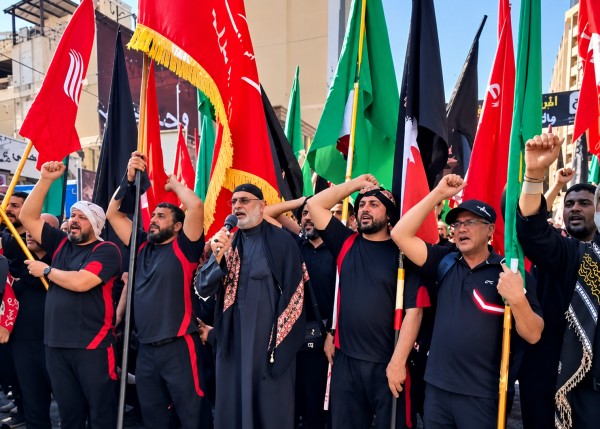
One of the most prominent expressions of this symbolic connection in contemporary political and religious discourse is the slogan adopted by some Islamic currents and movements, particularly in Iranian revolutionary discourse after 1979: “The road to Jerusalem passes through Karbala.” The slogan seeks to link the commemoration of Imam Hussein’s martyrdom, with its call for steadfastness in the face of injustice, to the cause of Palestine and Jerusalem as an extension of these values. This connection represents a political and religious vision adopted by particular currents, not a unified Islamic position shared by all denominations and movements.
Conclusion
Al-Aqsa Mosque and Karbala remain powerful symbols in Islamic memory, reflecting a deep cultural and religious interaction that transcends geographical and sectarian boundaries, even as interpretations and political uses of this symbolism have varied over time.